Dynamic Search Ads are being retired. Here's your migration plan.
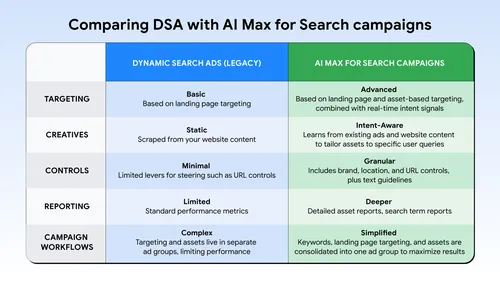
Google is retiring Dynamic Search Ads and replacing them with AI Max. Here's what to move, in what order, and what to expect when you make the switch.
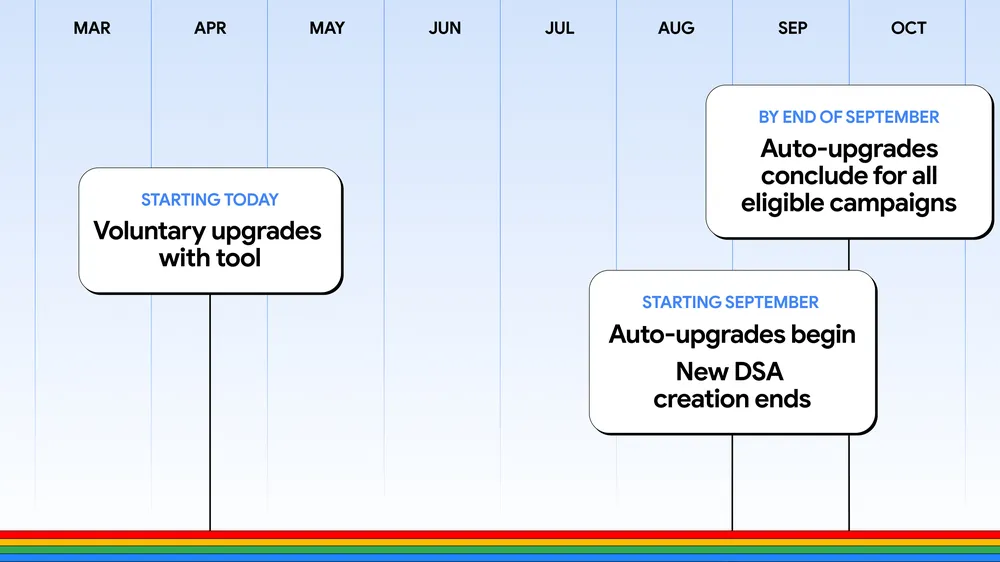
If you've been running Dynamic Search Ads, Google has made the decision for you: DSAs are going away. AI Max — Google's AI-powered replacement for search campaign automation — is the designated successor, and migration deadlines are approaching across accounts.
The good news is that most of what DSAs did well, AI Max does too. The bad news is that if you migrate without a plan, you'll lose the structural control and negative keyword coverage you've spent months building.
Here's what to migrate, in what order, and what to expect.
What's actually happening with DSAs
Dynamic Search Ads were introduced to fill keyword gaps — targeting searches not covered by your existing keywords by crawling your website and automatically matching queries to relevant pages. They offered broad coverage in exchange for limited control. Negative keywords were your primary guardrail.
AI Max does the same job but goes further. It uses Google's language models to interpret intent and match queries to a broader semantic understanding of your business. It generates ad copy dynamically, incorporates audience signals, and routes traffic across search formats. The underlying crawling logic is similar. The ambition — and the automation — is considerably larger.
What to do before you migrate
Don't migrate cold. Before you touch your DSA campaigns, do these three things:
1. Export your DSA search term history
Download the last 90 days of search term data from your DSA campaigns. This shows which queries actually drove conversions, which categories performed, and which terms your negatives were blocking. It's your intelligence layer for the migration.
2. Audit your negative keyword lists
Your DSA negative keyword lists are doing quiet but critical work. Export every negative applied at campaign and ad group level before you migrate. Note: AI Max uses campaign-level negative keyword lists, not ad group level — so the architecture changes slightly and you'll need to re-apply them accordingly.
3. Identify your highest-converting page categories
DSAs targeted specific website sections (e.g., /products/shoes). AI Max uses URL expansion by default, meaning it can go further than you intended. Knowing which page categories performed best tells you where to focus your first asset groups — and which expansions to limit.
The migration sequence
Follow this order rather than a cold switch:
Step 1 — Create AI Max alongside existing DSA campaigns. Don't pause DSA immediately. Run AI Max in parallel at 20–30% of your DSA budget. This gives you comparative data without risking your existing traffic.
Step 2 — Limit URL expansion initially. AI Max's URL expansion can send budget to low-conversion pages if left unchecked. Start with it off or restricted to your highest-performing page categories.
Step 3 — Apply your negative keyword list before go-live. This is the most important step. Without your existing negatives in place from day one, AI Max will replicate the same wasteful queries your DSA negatives were blocking.
Step 4 — Set up asset groups by intent theme. Don't use one generic asset group for your entire catalogue. At minimum, split by product category and separate branded from non-branded traffic.
Step 5 — Run parallel for 4–6 weeks, then shift budget. Once AI Max has exited its learning phase and performance is comparable to or better than DSA, gradually move budget across before pausing the DSA campaign.
What to expect in the first 4–6 weeks
AI Max campaigns have a genuine learning phase. Expect elevated CPA and inconsistent traffic volume initially. Don't pause the campaign or make structural changes during this period — doing so resets the learning phase and extends the disruption.
What to watch for:
- Search themes (under Campaign Insights) — flag irrelevant categories early and add as negatives
- Asset performance ratings — replace any "Low" rated assets within the first two weeks
- Landing page traffic — check URL expansion isn't sending significant spend to pages
with poor conversion rates
If CPA is more than 2x your target after 6 weeks with no improvement trend, review asset
groups and audience signals before adjusting the bid strategy.
What to do this week
- Export search terms and negatives from all active DSA campaigns now, before migration starts
- Create your first AI Max campaign in parallel — don't shut down DSAs yet
- Apply your exported negative keyword list before the AI Max campaign goes live
- Turn off or restrict URL expansion until you've reviewed landing page conversion rates
- Set a calendar reminder to review AI Max performance at week 3 and week 6
FAQ
Will AI Max cover the same queries my DSAs were targeting?
Broadly yes — and then some. AI Max uses similar crawl-based intent matching but with a
wider semantic net. In practice, this means more query coverage but also more potential for
irrelevant traffic. Strong negative keyword coverage at launch is essential.
Can I run AI Max and standard Search campaigns simultaneously?
Yes, and for most accounts this is the right long-term structure. AI Max handles broad intent
and query expansion; standard Search campaigns protect branded terms and high-priority
keywords with tighter control. They're designed to complement each other.
What if I leave DSA campaigns running and don't migrate?
Google will eventually sunset DSA support across all accounts, though they haven't
announced a universal hard cut-off date. Waiting passively means you'll eventually be
migrated on Google's timeline without the preparation described above. Better to move on
your terms.



23.png)