The Virtual Cupid: How AI Personal Shoppers are Saving Valentine’s Day (and Your Sanity)
We’ve all been there. It’s February 12th. You’re staring at a search bar, typing the same three words you’ve typed for the last five years: “Valentine’s Day gifts.” You hit enter and—as expected—you’re met with a wall of generic results. Red roses that will be wilted by Monday, heart-shaped boxes of chocolate that look suspiciously like the ones from last year, and a "Top 10" listicle that was clearly written for an SEO bot, not a human being with a unique partner.
For years, E-commerce has been a bit of a "pick-your-own-adventure" nightmare. We’ve had to do the heavy lifting: the searching, the filtering, the comparing, and the guessing. But as we move through 2026, the script has flipped. The "Search Bar" is retiring, and the "AI Concierge" is taking over the role of a digital Cupid.
From "Search" to "Conversation"
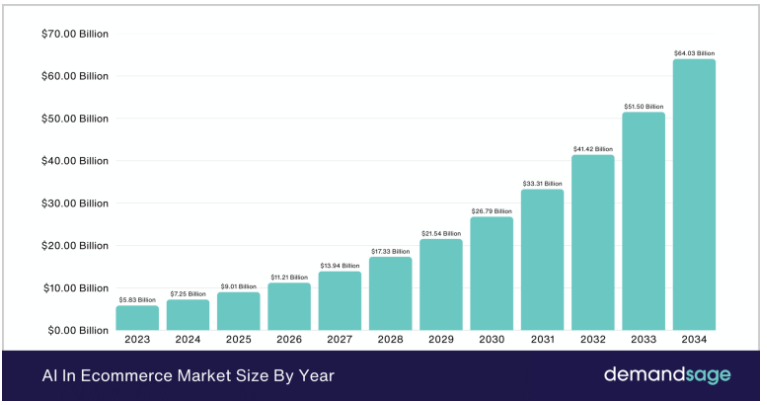
Traditional E-commerce is based on keywords. If you type "gold necklace," the store shows you every gold necklace they have. It doesn’t care if you’re buying it for a 16th birthday, a 50th anniversary, or a "sorry I forgot to do the dishes" peace offering.
The breakthrough we’re seeing this year is Intent-Aware AI. Instead of acting like a filing cabinet, online stores are finally starting to act like that boutique shop owner who knows exactly what you need before you do.
Imagine walking into a digital store and saying: “I’m looking for a gift for my partner. We’ve been together for six months. They love hiking, hate the color pink, and I want to spend under $100.”
- The Stat: Businesses implementing AI strategies for personalized experiences are seeing a 20% to 50% increase in revenue and conversion rates.
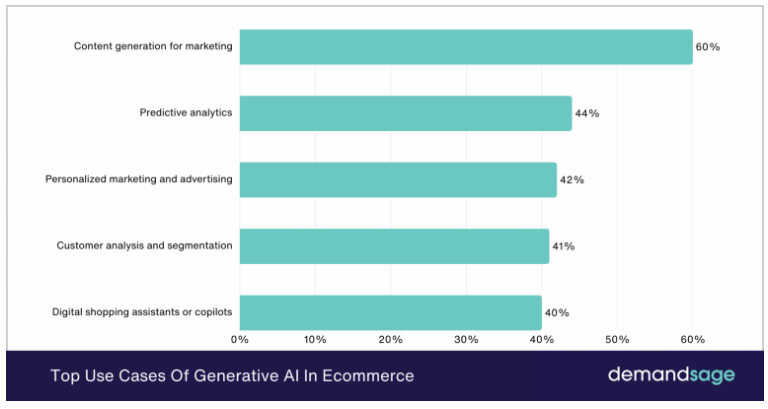
- The Trend: In, 46% of shoppers are now making purchases based on AI recommendations, and 40% of businesses are prioritizing "Digital Shopping Assistants" or Copilots.
In the old days (way back in 2023), a website would have had a stroke trying to process that. Today, AI agents—what we like to call "The Virtual Cupids"—process that sentence just like a human friend would. They understand the nuance of a "six-month" relationship (not too serious, but thoughtful) and the specific constraints of hobbies and aesthetics. They don't just show you products; they offer solutions.
The "Agent" vs. The "Bot"
You might be thinking, "Wait, aren't these just those annoying chatbots that pop up in the corner of my screen?" Not anymore. The 2026 version of AI is Agentic.
A chatbot answers questions; an AI Agent takes action. This year, we’re seeing stores implement Cupids that can check your past order history, look at your "liked" items on social media (with permission, of course), and even cross-reference your partner’s public "Wish List."
It’s a proactive concierge. It might say: "I noticed you bought a leather journal last year. Would you like to see some high-end fountain pens that match the aesthetic? I can even have it engraved with their initials by Tuesday." This isn't just selling; it’s curating. It’s taking the stress out of the "logistics of love."
The Human Touch in a Digital World

One of the biggest fears brands have about AI is that it will feel cold or robotic. On a holiday centered on emotion, that sounds like a disaster. However, the irony is that AI is actually making E-commerce feel more human.
By handling the boring stuff—filtering prices, checking shipping dates, and comparing sizes—AI frees up the "emotional space" for the shopper. When the search process is effortless, the buyer can focus on the sentiment of the gift rather than the frustration of the hunt.
For marketing agencies and E-commerce brands, this is the new gold standard. It’s no longer enough to have a fast website; you need a helpful website. You need a platform that listens, remembers, and suggests with intent.
Why Vulnerability is the New Marketing Strategy
In 2026, the most successful brands are the ones that aren't afraid to be "real." This means:
Admitting mistakes: An AI-powered customer service bot that says, "I’m sorry, I’ve messed that up—let me get a human teammate to fix this for you immediately," builds more trust than a bot that pretends to be perfect.
Behind-the-scenes content: Using AI to help edit and distribute videos of the actual people packing the boxes, designing the products, and drinking too much coffee in the warehouse.
The Paradox of Luxury
In the luxury E-commerce space, the human touch is the ultimate premium. While AI handles the 90% of "easy" queries, it identifies the "VIP moments" where a human should step in.
If a customer is about to spend $5,000 on an engagement ring, the AI doesn't just process the checkout. It triggers a "Human Hand-off," inviting a real-life consultant to hop on a video call. This hybrid model—AI-Powered, Human-Delivered—is the sweet spot for 2026. It ensures that when the stakes are high and the emotions are real, there is a heart on the other end of the line.
The takeaway for your agency:
The goal of marketing in 2026 isn't to prove how "smart" your AI is. It’s to use that intelligence to make the customer feel like the most important person in the room. In the end, we don't fall in love with algorithms; we fall in love with how a brand makes us feel.




23.png)