Google's Gemini Omni will now make your video ads. Three questions to answer before you let it
Gemini Omni video creation is live in Google Ads Asset Studio. Before generating a single asset, settle brand control, placement scope and measurement.
Gemini Omni video creation went generally available in Google Ads on 25 August. It sits inside Asset Studio, it turns a creative brief, your brand guidelines and existing static assets into horizontal and vertical video, and you refine it by typing at it. The limited-access gate that kept it to select accounts is gone, it is rolling out globally, and there is no additional cost.
So the question is no longer whether you can use it. It is whether you should let it run unsupervised — and most teams are about to answer that by default rather than by decision.
What it actually does
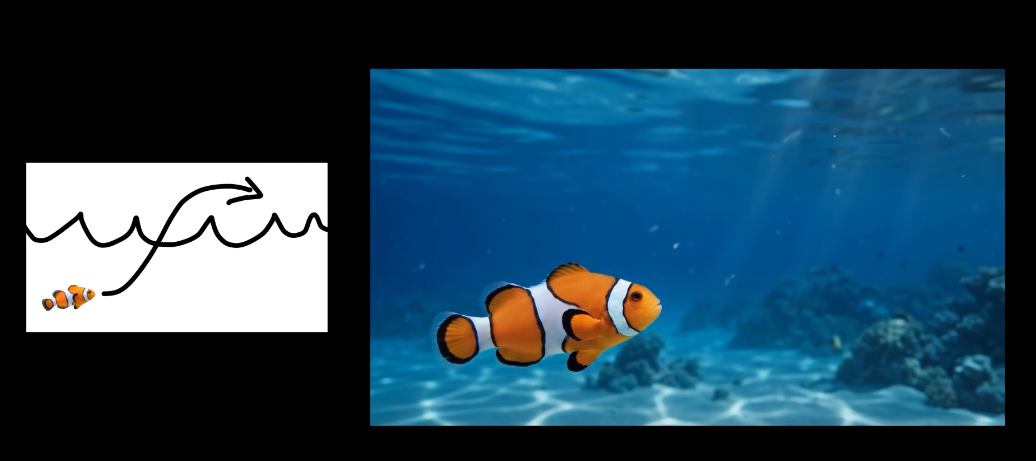
- It lives in Asset Studio within Google Ads, not in a separate tool.
- You supply a brief, brand guidelines and a website URL, or select existing static assets. It produces video storyboards and motion scenes.
- It generates 16:9 and 9:16 versions from the same workflow, which removes the most tedious part of multi-surface video production.
- You refine in natural language — scenes, backgrounds, styling, voiceover, pacing — in an iterative back-and-forth rather than a re-render.
- Output feeds Demand Gen and Performance Max, and Google and YouTube surfaces generally.
- It runs on Gemini, Veo and Nano Banana under the hood.
Google's own description is that the model "reasons about what should happen next while attempting to maintain the brand standards supplied by the advertiser". Read that twice. "Attempting" is carrying a lot of weight in that sentence, and it is Google's word, not a critic's.
Question one: who signs off brand?
Supplying brand guidelines is not the same as enforcing them. What comes back is an interpretation of your guidelines by a model that has never sat in a brand meeting. Sometimes that interpretation will be better than you expect. It will not be reliably correct, and the failure mode is subtle — not obviously wrong, just slightly not you.
Decide before you generate anything: who reviews the output, against what standard, and what gets it rejected. If the honest answer is "whoever is in the account that day", you have handed brand governance to a bidding tool.
A two-line rejection standard is usually enough. The one worth stealing: would this have
passed if a freelancer had delivered it and invoiced for it? If not, it does not ship — the fact
that it was free is not a quality argument.
Question two: where is it allowed to run?
Generated video inside Performance Max and Demand Gen goes wherever those campaigns go. That is a scope decision, and it is separate from the quality decision. Even good generated creative may not belong on every surface.
- Prospecting and upper-funnel, where volume of variation genuinely helps and nobody has a fixed expectation of what you look like: a reasonable place to start.
- Retargeting warm audiences and existing customers: higher risk. These people know your brand, and inconsistency reads as a downgrade rather than a refresh.
- Brand campaigns, considered purchases and high-value categories: hold. The upside is small and the downside is a trust cost you cannot measure and will not see coming.
Write the scope down. Undocumented scope decisions have a habit of expanding quietly, one asset group at a time.
Question three: how will you know if it beat human creative?
The common failure is procedural rather than creative. Generated assets get dropped into an existing asset group alongside everything else, performance moves for several reasons at once, and nobody can attribute the change. You end up with a strong opinion and no evidence, which is how these tools become permanent without ever being evaluated.
Set the comparison before you generate. That means a separate asset group or campaign where the result is readable, a decision window matched to your actual conversion lag rather than to your patience, and a stated success criterion that is not "it spent".
Be precise about which question you are asking, too. "Cheaper at similar performance" and "better than what we produce" are different tests with different thresholds. The first is a legitimate and common win — say so upfront rather than quietly moving the goalposts once the data lands.
The commercial read
It is free and it is global, which tells you what it is for. Google needs video assets to fill Demand Gen and YouTube inventory, and creative production has been the bottleneck holding that back. Removing the bottleneck is worth more to Google than charging for the tool would be.
That is not an argument against using it. The incentives genuinely align for advertisers who cannot produce video at all — Google wants inventory filled, you want to compete on surfaces you have been locked out of. It is an argument for noticing that you are being solved for, and for keeping your own success criteria rather than adopting the ones the tool ships with.
Worth testing if: you have solid static assets and no video capability, you are already spending on Demand Gen with thin creative, or you need format variations of concepts that already work.
Worth holding if: brand consistency is a commercial asset rather than a preference, your category is considered or high-value, you have no clean way to read the result, or you are sitting on unfixed waste elsewhere in the account. Generated video will not fix a targeting or tracking problem, and it is a comfortable way to look busy while avoiding one.
What to do this week
- Open Asset Studio and generate three assets against a real brief. You cannot judge this from anyone's write-up, including this one.
- Write your two-line rejection standard before you look at the output, not after. Judging output you have already seen is not judging.
- Decide the placement scope — which campaigns and audiences generated creative may run against — and record the decision somewhere it will be found again.
- Pick one campaign to test in where the result is actually readable.
- Set the decision date and the success criterion now, while you are still indifferent to
the answer.



23.png)